The Rise of Kata in Scottish Judo
Kata has been a core part of Judo training in Scotland since 2009, steadily gaining recognition and importance among judoka of all ages and skill levels. Over the years, JudoScotland has seen a significant rise in interest and participation in Kata, with more judoka embracing it not just as a requirement for grading but as a lifelong learning journey that enhances both personal development and technical proficiency.
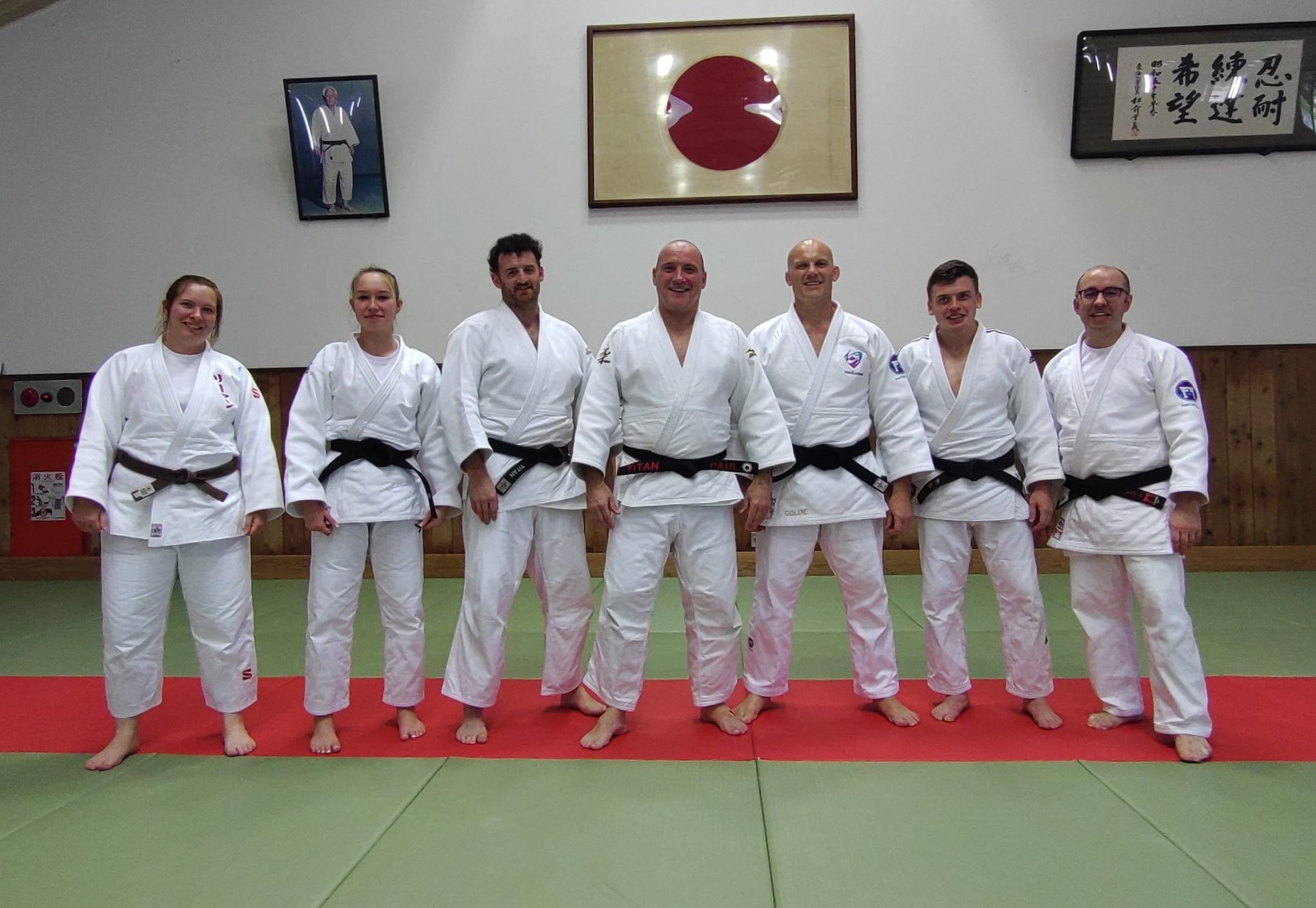
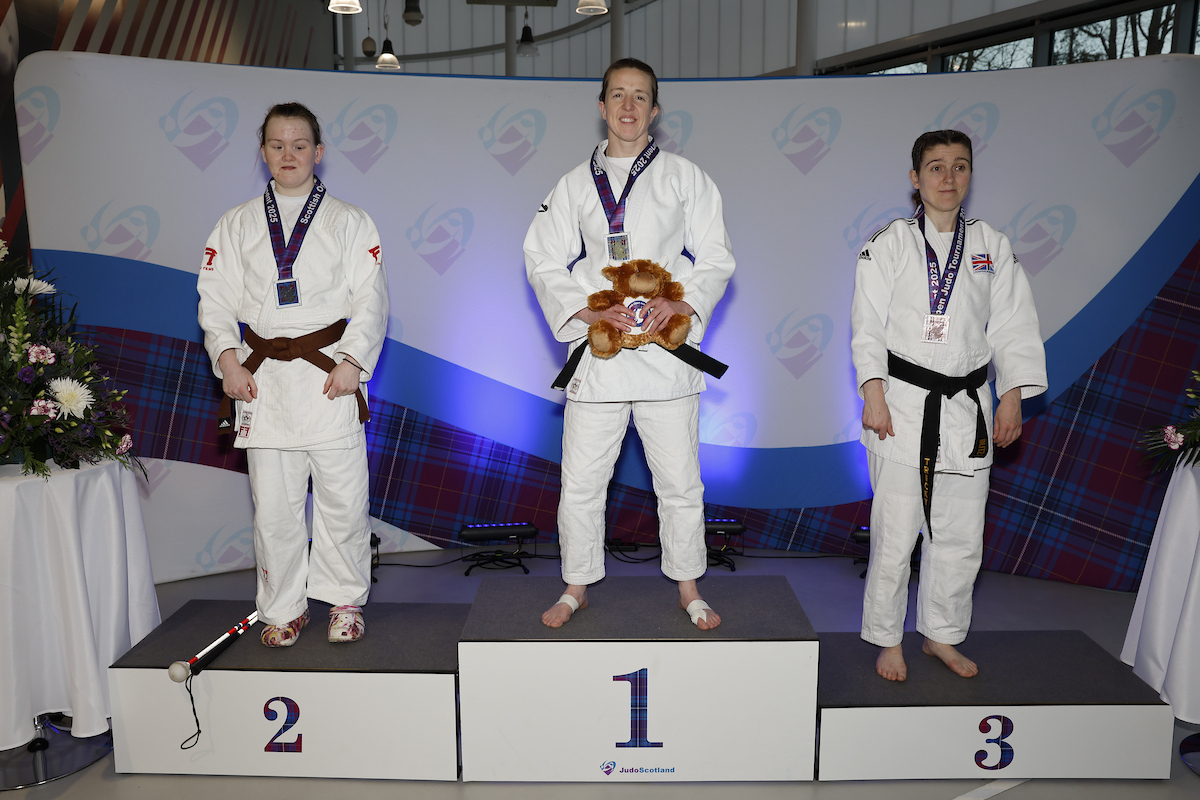
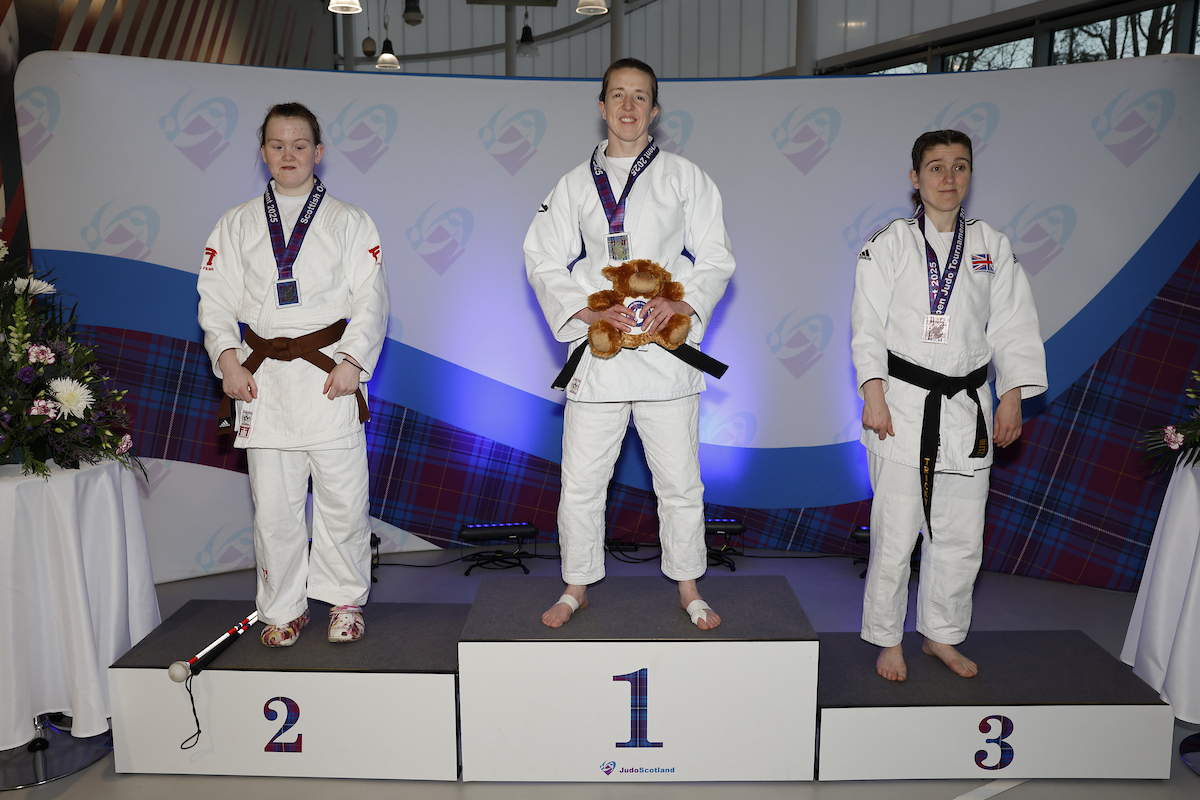
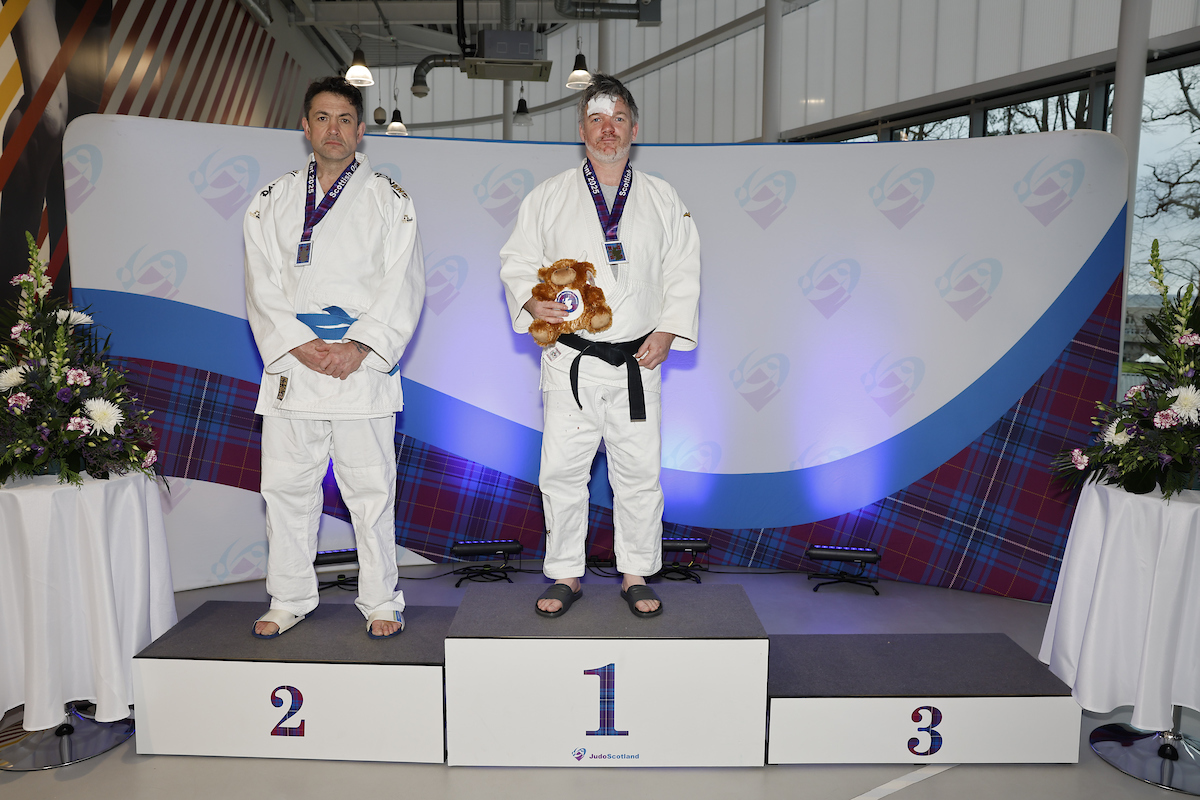
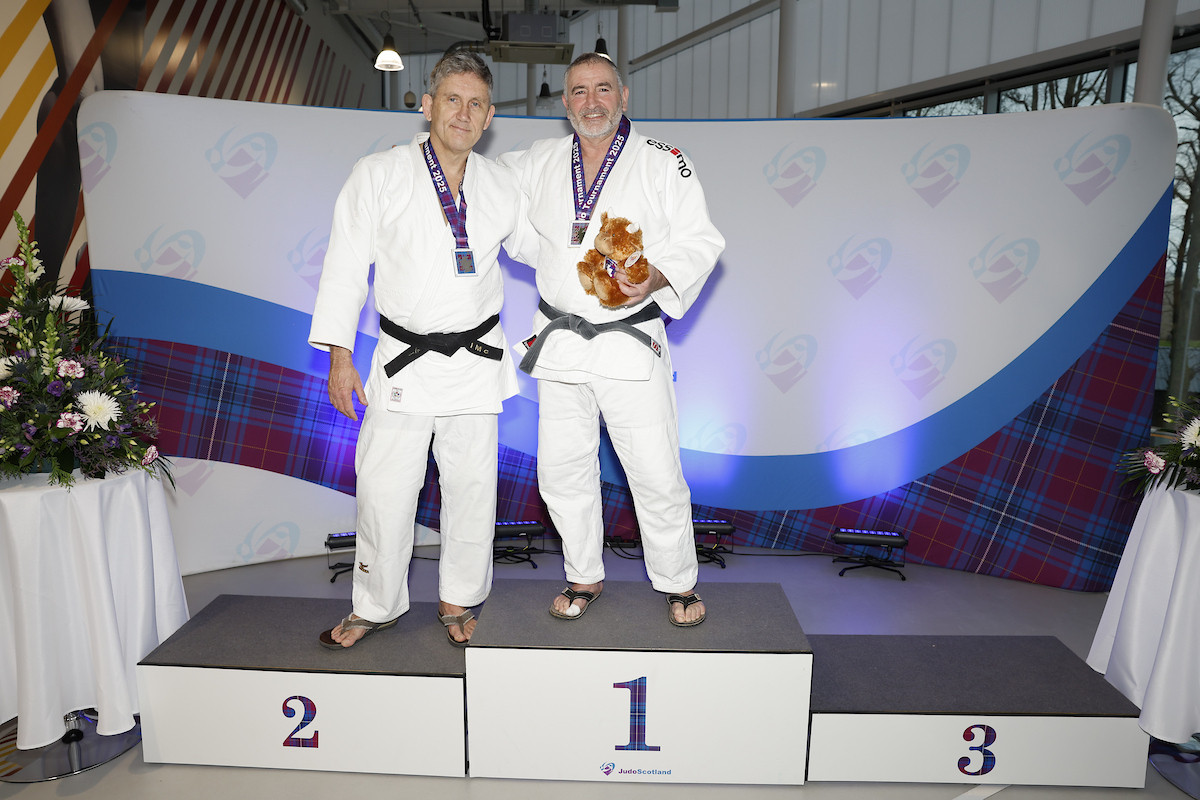
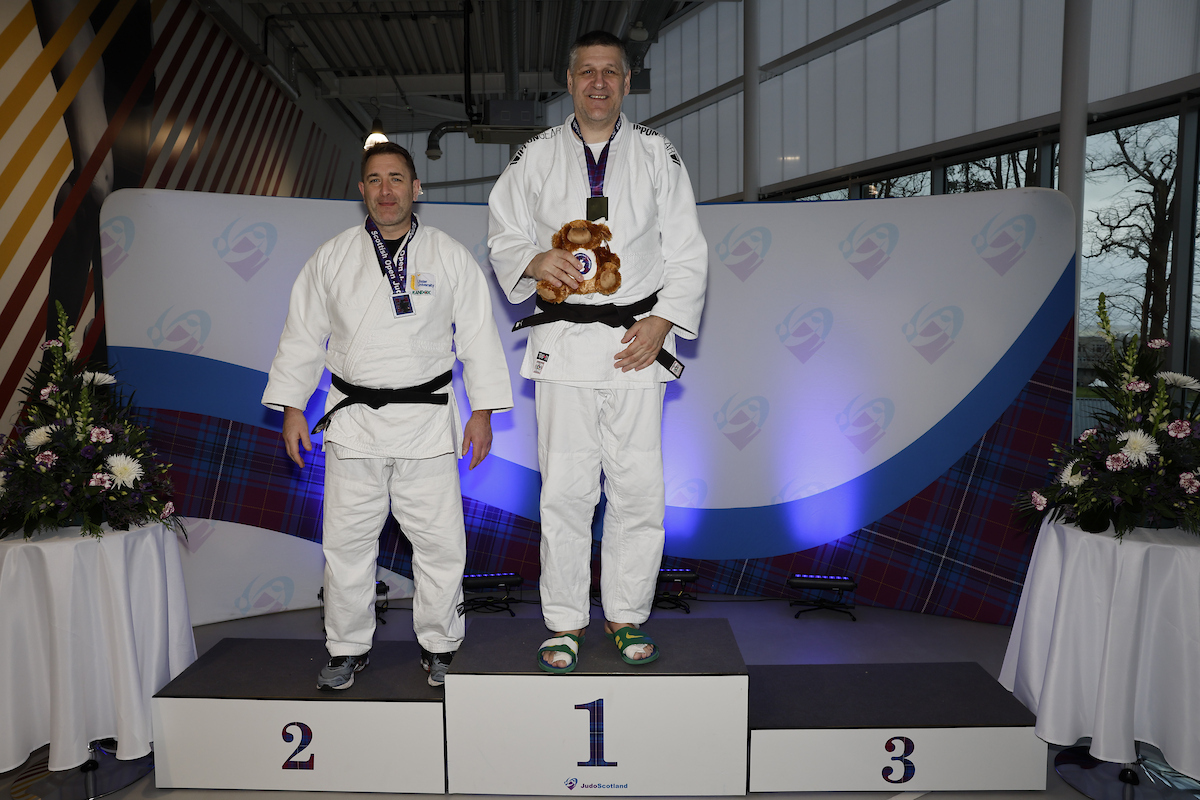
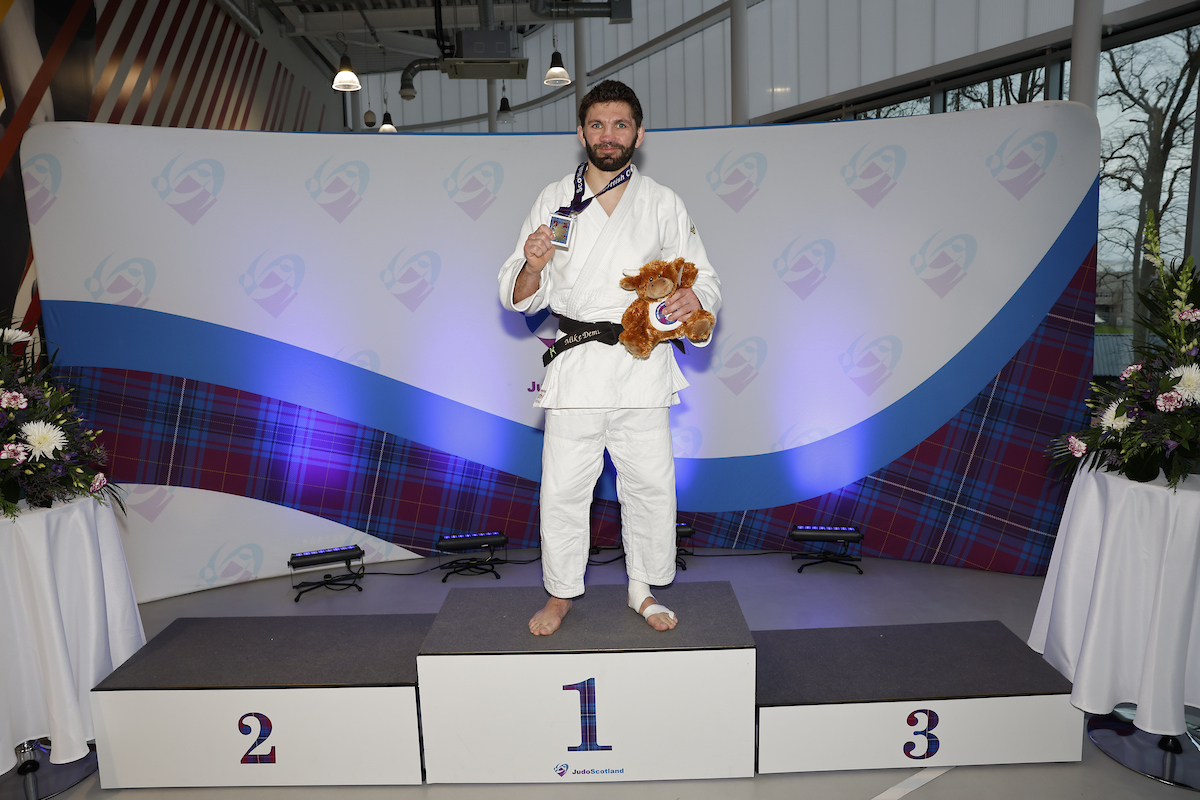
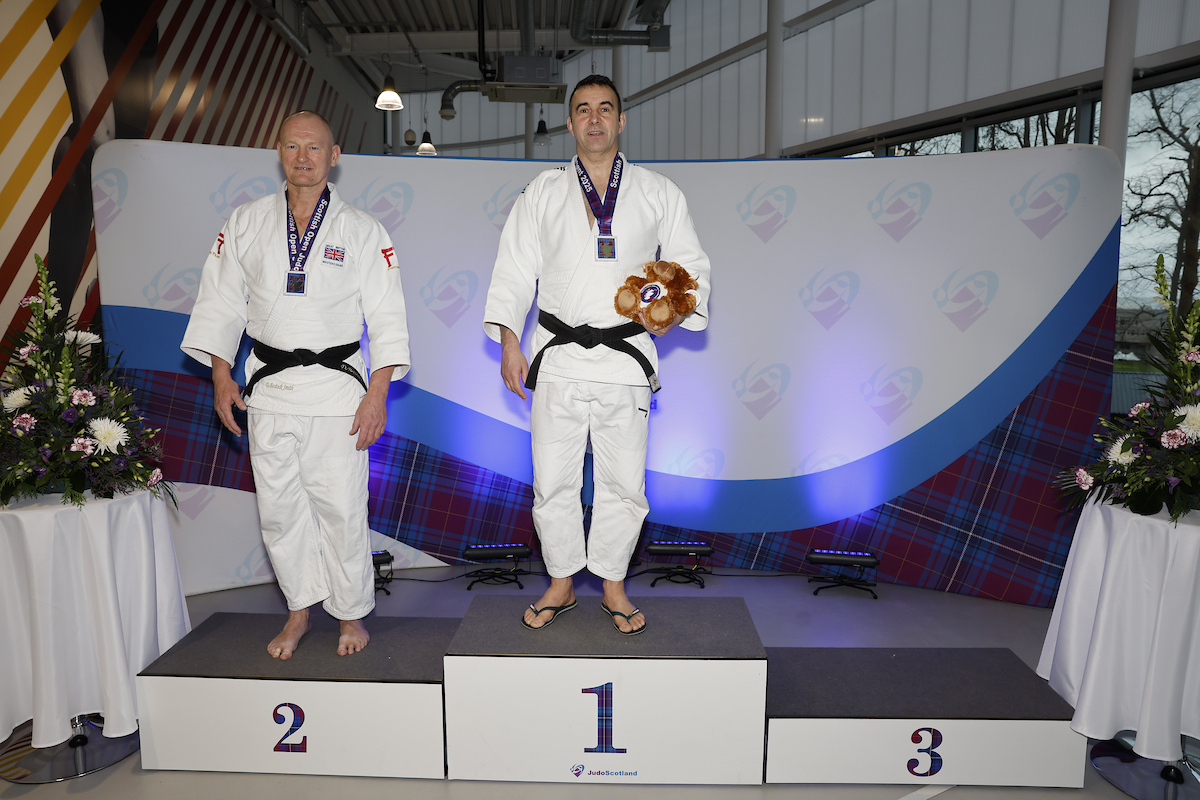
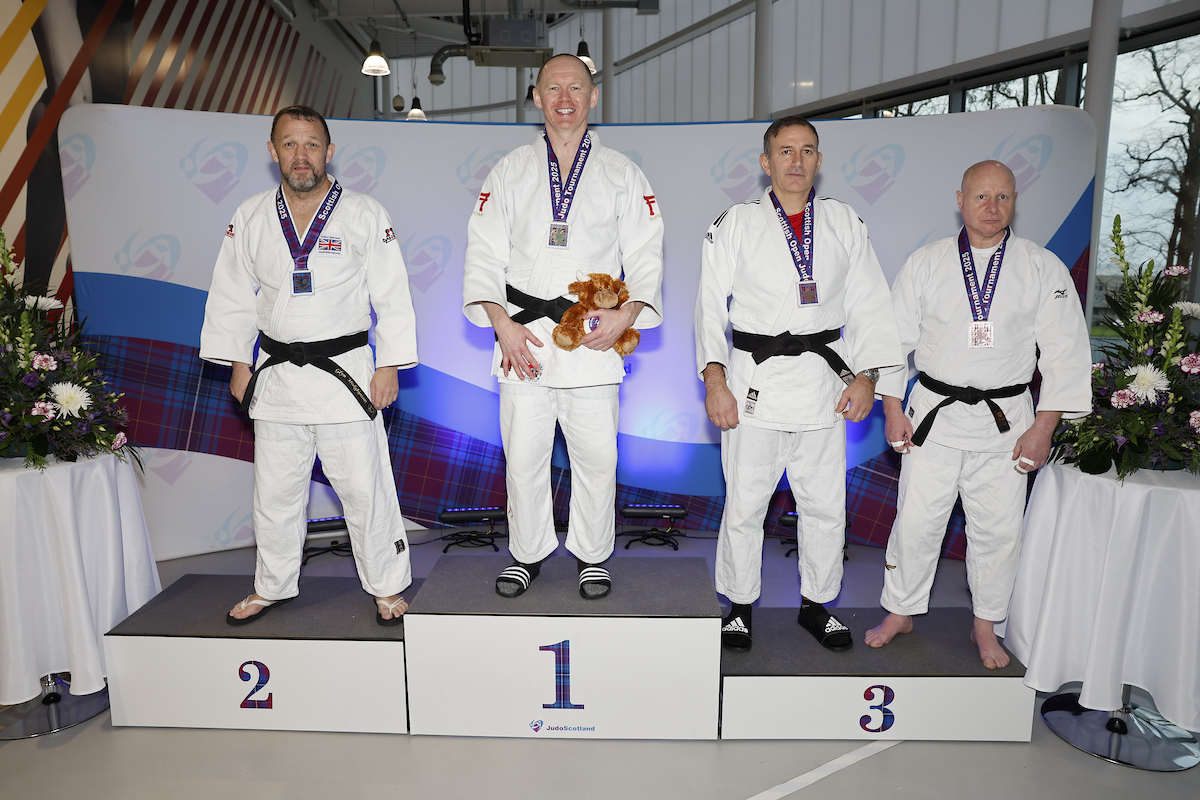
Last weekend marked a milestone for Scottish judo as a strong Scottish contingent headed south to compete in the British Kata Championships. It proved to be a successful weekend, with several standout performances. Paul Laverty and Alex Reid delivered exceptional displays, securing gold medals in both Katame-No Kata and Nage-No Kata, and a silver medal in Goshin-Jutsu. Colin Dunlop and David Gibson were in a competitive field of 12 kata teams and did well to achieve a bronze medal in the Katame-No kata. The pairings of Robert Milne & Andrew Gardner and Stanley Shaw & Peter McCann put in commendable efforts narrowly missing out on medals. In addition to their competitive achievements, Colin Dunlop and David Gibson were both promoted to the prestigious position of British Judo Kata Examiners, further solidifying Scotland’s growing influence in the Kata community.

Paul Laverty, who has performed in World and European championships, shared his insights on the evolving perception of Kata and how beneficial it can be in judo training. Speaking to Paul, it was clear that Kata is on the rise in Scotland and although some may view it as a requirement for grading purposes, it’s much more than a technical exercise.
“Kata can be whatever you want it to be,” Paul explains. “If you go into it with an open mind you’ll have a lifetime of learning from it. It benefits everybody, from your own personal development to coaching. I coach differently from before I started kata. I see things so differently. It teaches me best practice and breaks things down.”

Reflecting on the past weekend’s success, he says: “We went down with no other expectations other than to enjoy ourselves. Alex and I have a very good understanding of Kata, we felt we did ok.” Analysing his partner Alex’s performance, Paul states: “There’s not many 65 year olds that can get thrown 30 times consecutively but Alex’s Kata technique is so impressive it’s almost effortless. It’s a controlled environment and shows what good Kata does for you.”
It’s fair to say the interest in Kata has grown significantly in recent years. With more courses on offer than ever before, it’s encouraged more judoka to explore its benefits. As Paul Laverty mentions, “It’s becoming more popular, the British championships this year are the busiest I’ve ever seen. It’s heartwarming to see.”
The continued growth and success of Kata in Scotland have been bolstered by courses such as this weekend’s Kime no Kata course, which has over 50 participants registered. This trend demonstrates a renewed interest and commitment to understanding the deeper aspects of our sport.

With Kata gaining more visibility and recognition, it is evident that it offers invaluable benefits to practitioners of all levels – from coaching insights to personal development, the rise is a testament to the dedication of judoka and coaches. As more people embrace Kata as an important aspect of their judo journey, we look forward to seeing an even bigger engagement within Scottish judo. The recent successes at the British Championships and sell out courses signal a bright future for Kata in Scotland.
News From the Chair
A Brief update from the Chair of some key events and recent judo news from August.
Hi all
On the 3rd of the month, we tried something different, and piloted our first ‘Olympic Watch Party’. This was an Olympic and Paralympic-themed day at Ratho, where participants could watch the judo from Paris whilst participating in a fun mini Olympics event to win prizes. Oh and enjoy delicious food! What’s not to like? And hopefully, it’s something we can do again!
On that note, the GB Paralympic Judo players will be competing on Saturday and I wish Dan, Evan and Chris the very best of luck. Hopefully, it will be a successful event for them and a productive championship.
On 5th August Judith and myself visited Randori Judo Club in Midlothian to catch up with the coaches and see what they’re doing there. They have a fabulous facility and we’re hoping to be able to work more closely together going forward.
On 16th August, the Board of Directors got together for a fun evening at the Edinburgh Festival. I feel it’s very important that, as a Board, we get to know each other – so we can develop a cohesive Board that works well together as a collective. Unfortunately, I’d previously come down with food poisoning so was in no condition to take part! However, by all accounts, it was a great evening!
I did manage to catch up in August with Graham Campbell and Andrew Scoular, the CEO of British Judo. Again, it’s important that we have good, constructive relationships with our peers and partners. And, in fact, Andrew came along the next day to watch my wife singing in the Rock Choir at the Festival!
We held the Board of Directors meeting on 27th August and as always, got through a pretty full agenda.
But overall, a quiet-ish month, bringing the holiday period to a close. And now getting ready for a busy period including our Grand Prix event with Hibari Kan at Ravenscraig on 21st September. We will be hosting our annual MacMillan Coffee Morning at Ratho on Thursday 26th September between 11 am – 1.30 pm and it would be great to see lots of you along to enjoy a blether and some home baking!
Marc Preston
6th Dan
Nominations Now Open for the JudoScotland Coaching and Volunteering Awards 2024!
In addition to our existing awards, we’re thrilled to announce the launch of two exciting new awards: the Club of the Year Award and The Lifetime Contribution Award. These accolades are here to shine a spotlight on the incredible dedication of the Scottish judo community!
Coaches, officials, and volunteers are the true unsung heroes of our judo community; selfless, humble, and dedicated, tirelessly working behind the scenes without seeking recognition. Their efforts lay the foundation for everything we enjoy in this sport, from training to competition. Now is the time to celebrate their contributions by nominating them for a JudoScotland Coaching, Officiating, and Volunteering Awards!
Winners will be announced at The Gathering, then presented their award within their clubs, surrounded by the very people who nominated them. Don’t miss the opportunity to acknowledge those who make a real difference, nominate your judo hero today!
Entries Close Friday 27th of September so get your nominations in now!
Categories and Nominations
NEW FOR 2024 Club of the Year
This award recognises a club that has made a significant positive impact through the delivery, organisation, and development of judo, while promoting the core values of our sport and JudoScotland.
NEW FOR 2024 Lifetime Contribution Award
This award honours an individual who has demonstrated exceptional dedication to judo over a sustained period.
Community Coach of the Year
This award will be made to a coach who has supported the development of judoka and has significantly increased the Judo opportunities available and participation levels within their community.
Disability Coach of the Year
This award will be made to a coach working with people with a disability. The award looks for evidence of a person-centred delivery leading to successful performance and/or sustained participation of those taking part.
Technical Official/Referee of the Year
This award recognises the hard work and dedication that technical officials and referees make to the competition structure in Judo.
Pathway Coach of the Year
This award will be made to a coach who has supported the development of judoka and has significantly increased the Judo opportunities available and achievement levels within their community.
Volunteer of the Year
This award will be made to a volunteer in a non-coaching role, aged 26 years or more , who has made an outstanding contribution to their club, the wider judo community or to the development of judo.
Young Coach of the Year
This award will be made to a coach aged 25 years or younger . This award looks for young people who have invested in their development as a coach and have made a significant impact on the people they coach. The club will be a better place for having them in the team.
Young Official of the Year
This award will be made to a Technical Official or Referee aged 25 years or younger and recognises the hard work and dedication that these roles make to the competition structure; providing fantastic opportunities and experiences in judo.
Young Volunteer of the Year
This award will be made to a volunteer in a non-coaching role, aged 25 years or under who has made an outstanding contribution to their club or the wider judo community.
Paralympic Q&A with double medallist Sam Ingram
It’s not every day you get the chance to chat with a double Paralympic medallist, but when he’s part of the JudoScotland office team, that opportunity becomes a little more accessible. We spoke to Sam Ingram about the differences in Paralympic judo, his own success at the Games, and how important it is to support the sport at the grassroots level.
Q: What is the key difference in Paralympic judo compared to Olympic judo?
A: The main difference in Paralympic judo is that the athletes start the match already gripped up. Before the referee says “hajime,” the competitors take a sleeve and lapel grip on each other. If the athletes have opposite stances, such as left versus right, the referee decides who gets the dominant grip. Aside from the starting position, all other aspects of the contest, including techniques, match duration, and the shido system, remain the same.
For spectators, the gripped-up start can make the matches more exciting, as there’s no waiting around—the action begins immediately. However, this can also lead to some athletes becoming too defensive, though typically, it results in fast-paced and intense bouts. Starting from a gripped position places more emphasis on strength and speed from the very beginning.
Q: How are Paralympic judoka categorised?
A: In Paralympic judo, athletes are divided into different categories based on their level of vision. Judoka are classified into either J1 or J2 categories, with J1 being for those who are more severely visually impaired.
Q: How integrated are Paralympic and Olympic judo training environments?
A: One of the great things about judo is that it allows for a high level of integration between athletes aiming for the Olympics and those aiming for the Paralympics. It’s common to see judoka with disabilities training in mainstream clubs because judo is highly adaptable. This integration is a testament to the flexibility and inclusiveness of the sport.

Q: The British team is looking strong this year with Dan Powell, Evan Molloy, and Chris Skelly all aiming to medal. What can you tell us about them?
A: It’s a really solid team this year. Starting with Evan Molloy, he’s the up-and-comer of the group. While he’s a younger athlete in a tough category with many high-level competitors, I think he has the potential to secure a medal. Every success begins with that first big result, and I’m excited to see how he performs.
Dan Powell, on the other hand, is an experienced athlete with a strong chance of medaling. He competed in his first Games in 2012 and comes from a family deeply involved in judo. His background and experience make him a strong medal contender.
Chris Skelly is another standout, already a Paralympic champion with a proven track record of success. Although the recent weight classification change has been a challenge, he’s adapted well, and I’m confident in his chances.
These three have put in an incredible amount of effort and time into their preparation. As a team, Britain has a strong Paralympic judo reputation, with the world holding different expectations compared to our Olympic team. We’re seen as frontrunners and have performed well for a long time. While things don’t always go as planned, other nations are definitely keeping an eye on our athletes.

Q: Talk to us about your Paralympic journey that saw you compete at three different games, how did it all start?
A: I started judo pretty late, I first tried it in the summer in between leaving college and joining university. I was fortunate to live down the road from Coventry Judo Club, which was a really strong club with lots of people encouraging me. I was 18 but then took a break when I started university until I was about 21. I was doing a media degree, and I remember sitting with my friends and joking about making a documentary on me becoming a Paralympic athlete. I think we should’ve made it in hindsight but at the time none of us thought I would do it. Back in 2006, we were laughing about me taking judo up again and how we should film it, by 2008 I was competing and medalling at the Beijing Paralympics.
I loved being part of the performance side of sport, I had to sacrifice a lot like going out with friends, relationships and travelling but at the same time if I was to get a normal job and spend my weekends just going out I would be wishing I was a paralympic judo player. I had a great time.
Q: When did you start to realise that competing at the Paralympics would be possible?
A: I went to the World Championships in Sao Paulo, Brazil in 2007. I’d been to a couple of European Championships before but this seemed a really big deal. I went along and had four contests. Two people were a decent scrap which I won but I unexpectedly beat a French Paralympic silver medallist Olivier Cugnon de Sevricourt. I beat him and got into the final so being a world medallist opened up that door for me, it allowed me to get funding support and British Judo helped me take training more seriously. Before I competed in Brazil, I aimed to compete in London in five years but my result propelled me to Beijing where I got a bronze. I’d put it down to simply being able to take an opportunity. It came along, I was in the right space in my personal life and there was an opportunity to do something which I went after wholeheartedly. After Sao Paulo, I made the move to Edinburgh to train full-time.

Q: What was it like being Visually Impaired and training full-time at our National Training Centre?
A: People with disabilities are part of our lives, they exist and we encounter them. I look back on my time as a performance athlete here and think about what I got. I got lifts from people, I got support in all sorts of ways. When I first came was I up to the level of international players who were excelling? No, probably not. For a long time, I thought I was taking but there is some give there as well. Most people in society haven’t spent time with disabled people. It’s really positive that now we’ve had a whole group of performance athletes that will go out and run their clubs that have had experience of being around people with visual impairments for a long time. They start to learn that disability is second to the person. I think my time here was welcoming and the coaches and athletes supported me as best they could. A lot of that is not fancy, it’s as easy as picking me up from Haymarket as they drove past, but for ten years. They’d do their best to pick me up and I’d be there on time. It’s really simple stuff like that.

What is it like to experience the Paralympic Village?
I’ve been around a lot of visually impaired people, when you go into the village at the games you see a modern environment where everything has pretty much just been built. All of a sudden, there is access everywhere. People can get on any bus they want and there is a wheelchair ramp, it sounds obvious but everything is designed with Paralympians in mind. You realise by contrast how difficult the real world is. For example, if you’re going to get a coffee in the village there is low shelves for people in wheelchairs and all the signs are larger for those who are visually impaired. But when you get out you see the clash, no ramps anywhere and the signs are tiny. I’ve never seen it before with how disabled people are proud to be disabled. Once you are in the village everyone’s guard is let down. It’s a special place where people can laugh with each other there is a strange mood of ultra competitiveness combined with a friendly atmosphere.

And finally, what do you believe is the most important factor in ensuring the future success of the Paralympics?
The Paralympics wouldn’t be possible without the support of clubs and infrastructures like those in judo. For events like the Paralympics to thrive, sports need to be nurtured at the grassroots level. Sometimes there can be a sense of disconnect, but as long as clubs within our organisation and others remain active, the Paralympics will continue to flourish.
For more information about Visually Impaired judo in Scotland, check out our page here.
News From the Chair
Hi all
A very short Chair’s report for July.
The Veterans National 1st Kyu & Dan Grading was held on 21st July; a good turnout considering the summer period and we are thankful for the support of our member club, Glenrothes Martial Arts Centre (GMAC) Judo who provided a great facility for the day.
The main talking point of July was, of course, the Olympic Games in Paris. Team GB had 5 female players in contention. Unfortunately results didn’t go as hoped and there were no medals however I would like to congratulate them all on their qualification; it’s a huge achievement to ultimately be competing at the Games.
The event itself was absolutely magnificent, with superb judo. The French love our sport and created an incredible atmosphere. It was an absolute joy to be in such a cauldron witnessing judo at its absolute best!
I’d like to take this opportunity to thank Andrew Scoular, CEO of British Judo and Gerry Gualtieri, Chair of British Judo, for their hospitality and for looking after us so well It’s critically important that JudoScotland and British Judo are aligned and continue to build on our very strong relationship. Also, thank you to our International Judo Federation friends and contacts; great to strengthen the bonds that we’ve developed over the years. As per my previous report, I went for the first 3 days, then Judith and ultimately Graham Campbell took over for the remainder of the event. We had some really good networking opportunities and we’ve already initiated relationships with other Federations/Associations, all boding well for the future.
As the judo came to a close, we hosted an Olympic Watch Party at our headquarters in Ratho. It was lovely to see staff and members with families & friends join in some fun and camaraderie. If you haven’t been along to our offices and National Training Centre before and would like to, you are always welcome to pop in.
But back to today, and as the start of the new school year fast approaches I’d like to commend our coaches and clubs, keep up the good work. And please have a look at Events | Judo Scotland – over the next few months, there are an array of fantastic opportunities. Let’s smash it!
Marc Preston
6th Dan
Judo Girls Rise Fund
We are excited to announce our new Judo Girls Rise Fund which will provide clubs the opportunity to access a grant of up to £600.
As we look to increase female participation across Scotland, we acknowledge the role that female-only environments play in attracting and retaining girls and women in sport. Our membership is only 29% female – we have ambitions to improve this and we hope you do too. We believe judo is a sport for all, and we know there are many more girls and women who could benefit from all that judo has to offer. This is why we are looking to grow the availability of girls or women-only participation programmes in our judo community.
Could your club become part of our new Judo Girls Rise network?
We want to inject funding into club’s that are committed to creating a sustainable programme that will allow female participation to thrive in your club.
Our fund will allow up to 8 clubs up to £600 in funding to launch or invest in a new or ongoing female participation programme in their club.
Scotland has a rich history of females participating in judo at every level, which has allowed our judoka to soar domestically and internationally. We want to rise up this next generation and give them the best experience of what judo has to offer. By listening to our female population we know that there is an infinite list of benefits to participating in judo including building resilience, increasing confidence and making lifelong friendships.
If you are successful in applying for the fund you will access wrap around support from JudoScotland that will be in place to develop your Judo Girls Rise programme and provide more experiences for your participants. This will include options to access female-led masterclasses, marketing toolkits and partnership building support.
Club Support Officer, Laura Kirkhouse, is excited to see how this fund can develop female participation in judo: “The Judo Girls Rise Fund is a great opportunity for clubs to invest in a pathway for girls and women to access judo for the first time or keep them in the sport for longer. I am enthusiastic about a network of Judo Girls Rise programmes emerging across the country, and I hope clubs seize this opportunity to inject funding into female participation. With so many outstanding Scottish female role models in judo, now is the perfect time to invest in nurturing new female judoka on their judo journey.”
To make an application to the Judo Girls Rise Fund please click the link below. Please note applications close on the 30th August. Decisions on applications will be made on a rolling basis so we advise applying as soon as possible. Funding can be applied for to begin a new female participation class or project but can also be applied for by clubs to further develop existing programme.
If you would like to discuss this opportunity please get in touch by email laurakirkhouse@judoscotland.com or phone on 07743 937 450.
Six Teams, 40 Judoka, and a Wealth of Medals: Scotland's Success in Walsall
Team Scotland entered this event knowing that we hadn’t stood on the top of the podium since 2019, with all six teams determined to make history.
As the JudoScotland supporters club began to chant and their clappers echoed through the University of Wolverhampton sports hall, the Junior and Cadet boys’ and girls’ teams kicked off the event.
It began in epic fashion with a thrilling match-up against current title holders London. In an action packed contest, the boys’ team emerged victorious with a 4-3 win.
Unfortunately, the girls’ team faced tough competition and ended with a 1-4 result. However, the girls bounced back in style with a stunning 5-0 victory over the North West, with the first three bouts ending in ippon in under 30 seconds. This saw them advance safely through the pool stage and into the knockout.

The matches were coming thick and fast, next to the mat were the pre-cadet boys who after losing 5-2 in their first match, won 6-1 against the North West with some brilliant judo on display.

After their opening victory, the junior boys were on an almighty high as they cruised past the West 7-0 and beat Wales 6-1, securing their place at the top of the pool and advancing into the knockout stages.
The senior men were up next, with the welcome late addition of Stuart McWatt, once again starting against London. In a hotly contested match, which included some crucial referee decisions, they narrowly lost 3-2, showcasing impressive throws throughout. However, they quickly bounced back with an impressive 4-1 victory over the North and another 4-1 win against the Midlands, achieving numerous ippons along the way.
The pre-cadet girls introduced themselves to the championships in style – three 4-1 victories against the South, Wales and the Midlands area saw them through the semis, finishing the tournament with a bronze after losing out to the North West 3-2 in a nail biting affair.

The pre-cadets’ match against the West provided one of the highlights of the day. A decisive ippon from Kieran Carson secured a thrilling 4-3 victory for the Scots, propelling them into the semi-finals. There, they came agonisingly close to repeating the scoreline but fell just short, losing to the South.
Unfortunately for the senior women, a depleted squad saw them exit in the group stages, despite their utmost effort and some members of the team moving up categories to eek out a win.
The senior men faced an uphill battle for the rest of the competition, starting each match 1-0 down. Despite this, they showcased impressive ippons and techniques throughout. They narrowly missed out in the semi-final, losing 3-2 to the eventual winners, the South.

So with three semi-final defeats, all hopes of dispelling the 2019 blues rested on the young shoulders of the cadet/junior boys. Before they could envision the final, they had to overcome the North West. Our young Scots showed no sign of nerves as they rose to the occasion, securing a commanding 6-1 victory and booking their spot in the final, where they would face London once more.
As the semifinals concluded across the mats, one final match remained in focus: the junior/cadet final. As with every previous match, Coen Gilbert led the charge in the -50 category, the sportif youngster remained calm and composed, eventually winning by Ippon with just 23 seconds left on the timer.
Next up, Joe Buchanan, whose dad John had won the same competition 10 years to the very day. Took to the mat in style and won by a beautiful Ashi Waza to double Scotland’s lead.

The entire Scottish contingent, including every team member, staff, and parents, cheered loudly as Vasily Menshykov stepped up next. Unfortunately, despite leading with wazari for the majority of the match, he was ultimately defeated by ippon.
Sol Savoury stepped onto the mat with a calm confidence, fully aware that a defeat would level the scores at 2-2. His performance betrayed no hint of doubt. With an unwavering focus on his opponent, he swiftly secured victory via ippon, restoring Scotland’s lead by two points.

With the score now 3-1 and only three contests remaining, Eden Heffernan stepped onto the mat knowing that a victory would secure the win for Scotland. The tension was palpable as everyone watched with bated breath, especially as the match headed into golden score. This was Eden’s second bout against his opponent, having lost to him in the group stages.

Eden’s determination to correct his earlier loss was evident as he executed a flawless Uchi mata, clinching the trophy for Scotland. The hall erupted in cheers as soon as the throw was complete— the young Scots secured gold.
Arad Rad and Kevin Gordon were still to fight though came off second best to two top opponents.

In a day filled with remarkable displays of judo and intense rivalry, the Scottish contingent delivered an unforgettable performance. From the last gasp victories to the moments of resilience and pure determination, each judoka showcased their commitment to their craft and country.
Saturday culminated in the junior boys standing proudly atop the podium, creating their own piece of Scottish judo history.
News From the Chair
Hi all
I hope by the time you’re reading this you’re enjoying – or looking forward to – a well-deserved break.
For me, the month started on 1st June when I caught up with Neil and Niki Adams. Neil is an MBE, 9th Dan, ambassador for the JudoScotland Coaching Academy, technical expert and referee supervisor for the IJF. He was in Ratho to deliver a very well attended course on competition rules. I know Neil and Niki well, having been in the same team as Neil on several occasions and having kept in touch over the years. An absolute superstar, and, as ever, thanks Neil for your support.
National High Performance Coach, Euan Burton, was running a training workshop for the U23 Squad the same weekend. I sat in with the players during the sport psychologist, James Austin’s session. Many of you will remember him as a fine GB Judoka. It was all about controlling your nerves before matches, how to build this into your preparation and how to cope in a competitive and productive way to enhance your chances of winning a match. I found it absolutely fascinating – definitely something I would have valued as a player back in the day. I’d highly recommend the session if you get the opportunity, and thanks to Euan for the invite.
It’s really important as an organisation we continue to upskill and evolve. And, on 4th June JudoScotland Staff and Board members got together to take part in a course covering ‘Low Level Concerns’. I’d previously been on the same course earlier in the year and, again, found it invaluable. I hope that the team derived as much benefit as I did.
On 18th June, Judith and I were invited to the British Judo Board of Directors meeting in Walsall. It’s really important that we have a joined up pathway if all our Home Nations are to move forward successfully. I’d like to thank the Chair, Gerry Gualtieri and CEO, Andrew Scoular for their continued hospitality.
And on that theme, on 19th June I caught up with Shohei Ono in the Royal Mile where we kitted him out in full Scottish regalia as we prepare to launch JudoScotland’s own kilt. It is fantastic for us to have such a high-profile player in our ranks, and our thanks go to Shohei for supporting our brand and Scottish judo in general.
We finished by going for a nice brunch and catch up. Again, it’s important that we make our international guests feel at home and welcome in Scotland. Hopefully, he will always talk highly of his time and experience here and encourage more colleagues to come.
On 25th June we had our Board meeting. The one topic I want to highlight is a substantial piece of work to upgrade the grading process and product…..watch this space for more info.
The next time we catch up, the Olympics will have come and gone. Judith and I will be there representing Scotland on a split shift – I’ll be there first for a few days, followed by Judith. It’s really important that Scotland is at the top table, networking, forming relationships and maintaining the strong links that we already have with the IJF. I’ll give you an update on this in my next Chair’s Report and good luck to all of the GB team who are competing.
At the time of writing, JudoScotland’s teams are preparing for the National Teams Championship at which there will be a strong JudoScotland contingence of supporters to cheer them on – best of luck to everyone who has been selected to represent their country.
And finally, I wish every one of you a fantastic summer.
Marc Preston
6th Dan
Blog: Kirsty Wilson on refereeing
In her own words, Kirsty Wilson reflects on her unexpected journey from judo competitor to referee, highlighting the personal and competitive benefits of officiating in judo.
My judo journey began when I was just three years old. Little did my parents or I know that 13 years later I would be so involved in the sport (much to my dad’s annoyance as I make him drive me across the country every other weekend)! I don’t think I can explain exactly why I like judo. It’s probably the people. Judo isn’t a team sport, but I think it’s still so close-knit as a sport, as well as in individual clubs; I truly believe that there is a real team spirit to it.
In October of 2022, one of my club coaches mentioned a refereeing course and suggested I should go along. At this point, I had only been competing for a matter of months and to be honest, I knew nothing about the rules. I knew I couldn’t go out the mat area, I couldn’t armlock or strangle and that I was only to stop if the referee called matte. So, I went along to the course mainly to learn some more rules. I had no great intentions or desire to become a referee. For starters, I didn’t have nearly enough confidence for that. I sat the course and fulfilled my aim of learning some rules. I also participated in a multiple choice test about different scenarios that had been spoken about during the day (this was the part where my avid love of notes came in handy)! I was graded there and then and whilst I can’t remember what the pass rate for an area referee was, I do remember that I got one mark over whatever it was. I was off to a shaky start when it came to refereeing.
My start got shakier when I had to go out into the middle of the mat. I mean, what if I got it wrong, the world would fall apart! I have later found peace with getting it wrong because I have realised that if you do, they just tell you and you change it.
I can safely say now that my first few events weren’t great; as soon as one thing went wrong, it would set me askew for the rest of the fights. I also had a habit of just looking a bit scared, because I was. But I still went out, once every couple of months and did some refereeing.
The more practice I had, the better I got and my confidence began to grow. If you told me a year and a half ago that I’d end up refereeing as much as I do and enjoying it, I would be gob-smacked, I think I would have keeled over if I knew I’d end up getting the young referee award last year. And now I’m being told by the people higher up than me that I should be pushing to get a national C qualification!

Refereeing has massively improved my confidence, in and out of judo. It’s helped my competitive judo because I now understand fully what I can and can’t do in a contest.
I’m so lucky that at every competition I have been able to split my time between refereeing and competing. The other referees have been nothing but supportive of me leaving the mat to compete. It is often them telling me “Kirsty you need to leave now because you are on in an hour and a half!”.
I think it is important that other young people know that it doesn’t have to be one or the other when it comes to refereeing and competing. I think a lot of people believe that all the referees started when they either become too old to compete, had injuries or had just never done it in the first place. I can understand why one might think that because in most cases that is true. So, I hope I can be proof to those who want to start refereeing that it is possible to successfully referee and compete.
I think there is a significant issue with young referees, in that there aren’t enough of them. I don’t know of many other referees who are similar in age to me. There certainly aren’t any regularly attending events in Scotland.
However, there is a fine line that needs to be danced on to fix this problem. One of the good things when I did my qualification was that it was pretty much just me doing it at the time. This meant that I could attend every event to gain experience. Recently I think there was a really large group of people who sat a course and became trainees. We need to work to ensure that this continues in the next few years and that the system in place can withstand having larger volumes of people put through so is enough practical practice time for new referees. Truthfully, I don’t know what the answer is, but I do think that there is a massive need for younger referees. Ultimately, competitions can’t happen without the officials and the referees. And if the cycle doesn’t have more referees put into it then it will grind to a halt.
People make judo happen and people make it what it is, right the way from the very top of the chart down to little girls and boys like me starting judo at three.
JudoScotland Teams Up with FabLittleBag to advance Period Support!

JudoScotland Teams Up with FabLittleBag to advance Period Support!
JudoScotland is thrilled to announce an exciting new partnership with FabLittleBag, aimed at breaking the stigma around periods and providing the female judo community with easy access to free period products.
Research consistently shows that periods significantly impact girls’ participation in sports, with alarming drop-off rates in the early teenage years. Periods are frequently cited as a major reason for girls becoming inactive or leaving sports altogether. We are determined to change this narrative.
Through our partnership, every stage of JudoScotland’s talent pathway will be equipped with a FabLittleBag ‘Coaches Bag,’ ensuring athletes have convenient, free access to period products during training and trips. Additionally, we pledge that all our events will be ‘Period Supportive,’ with the provision of products for all athletes.
JudoScotland is also pleased to share that we will offer each affiliated club a Coaches Bag so that members of the judo community across Scotland will have a provision of free period products in their local club (full details below).
We believe this initiative will set a new standard nationwide, making it a priority to create inclusive environments for female judo athletes. We also hope this move fosters greater awareness and education on how periods affect female athletes, and how we can better support them.
Martha Silcott, CEO & Founder of FabLittleBag, commented on the partnership: “We are excited to welcome JudoScotland to our Period Supportive Movement. They are committed to ensuring that their events and performance pathways will positively address period challenges by providing our Coach’s Bags containing free period products and FabLittleBags for easy confident disposal. Leading the way for all their clubs to become more inclusive and welcoming to women and girls ensuring that clubs have our Coach’s Bags which mean that periods are no longer a barrier to participation in Scottish judo clubs.”
Judith McCLeary, CEO of JudoScotland, is equally passionate about the signal that the partnership represents for our female community: “We’re thrilled about our partnership with FabLittleBag and the introduction of free period products for female athletes nationwide. This initiative is all about breaking down barriers and reinforcing our commitment to making judo an inclusive and welcoming sport for women and girls. No judoka should ever feel compelled to leave the sport because of their period. This is a significant step forward as we continue to expand our support for the females in our judo community, and we couldn’t be more excited about the positive impact it will have.”
Join us in championing this cause and making sports more inclusive for all!
Registration Information for Clubs
Alongside the ‘Coaches Bag’, each club that registers will receive an Information Booklet outlining some further resources that can be used by coaches and clubs.