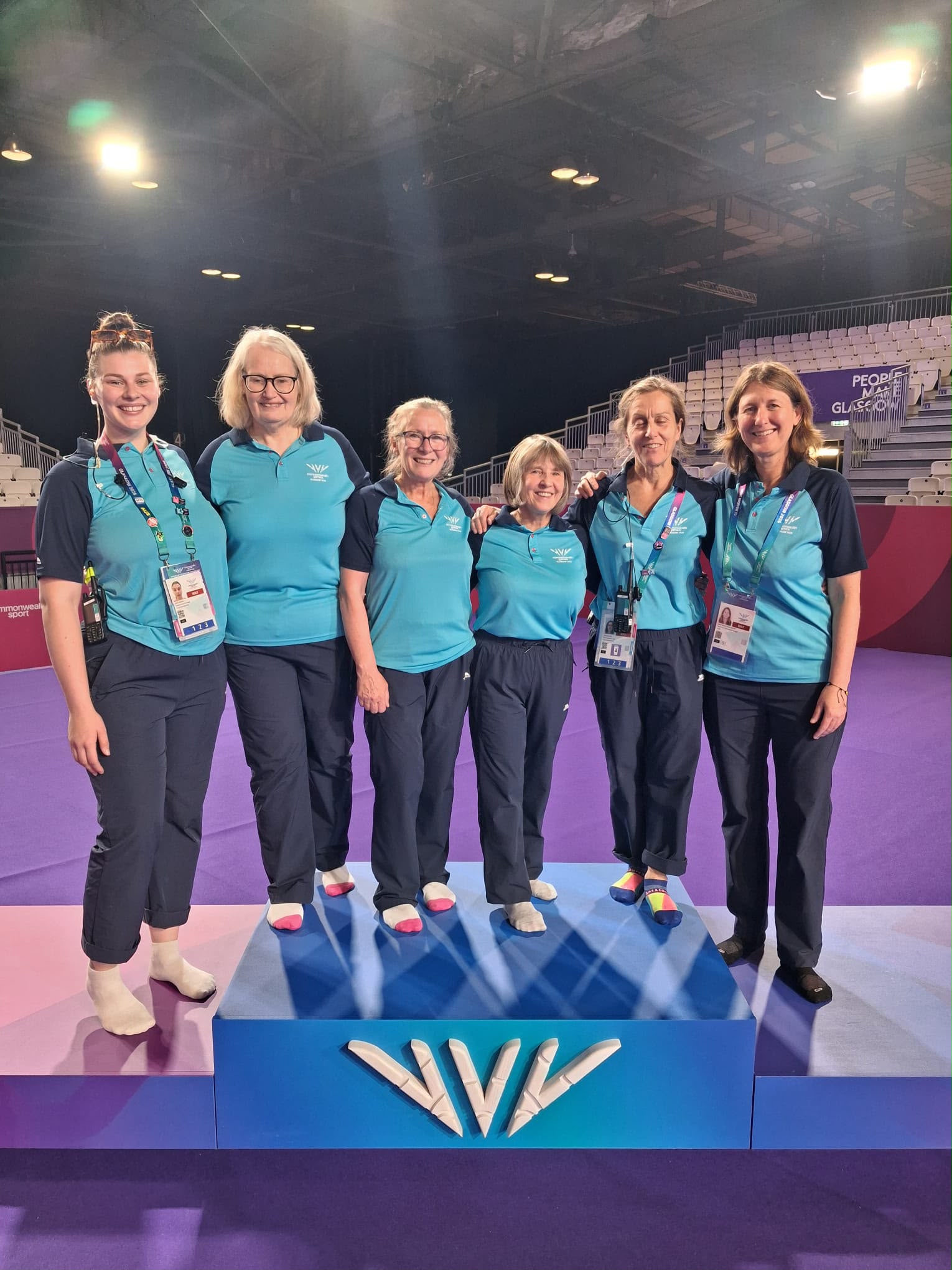
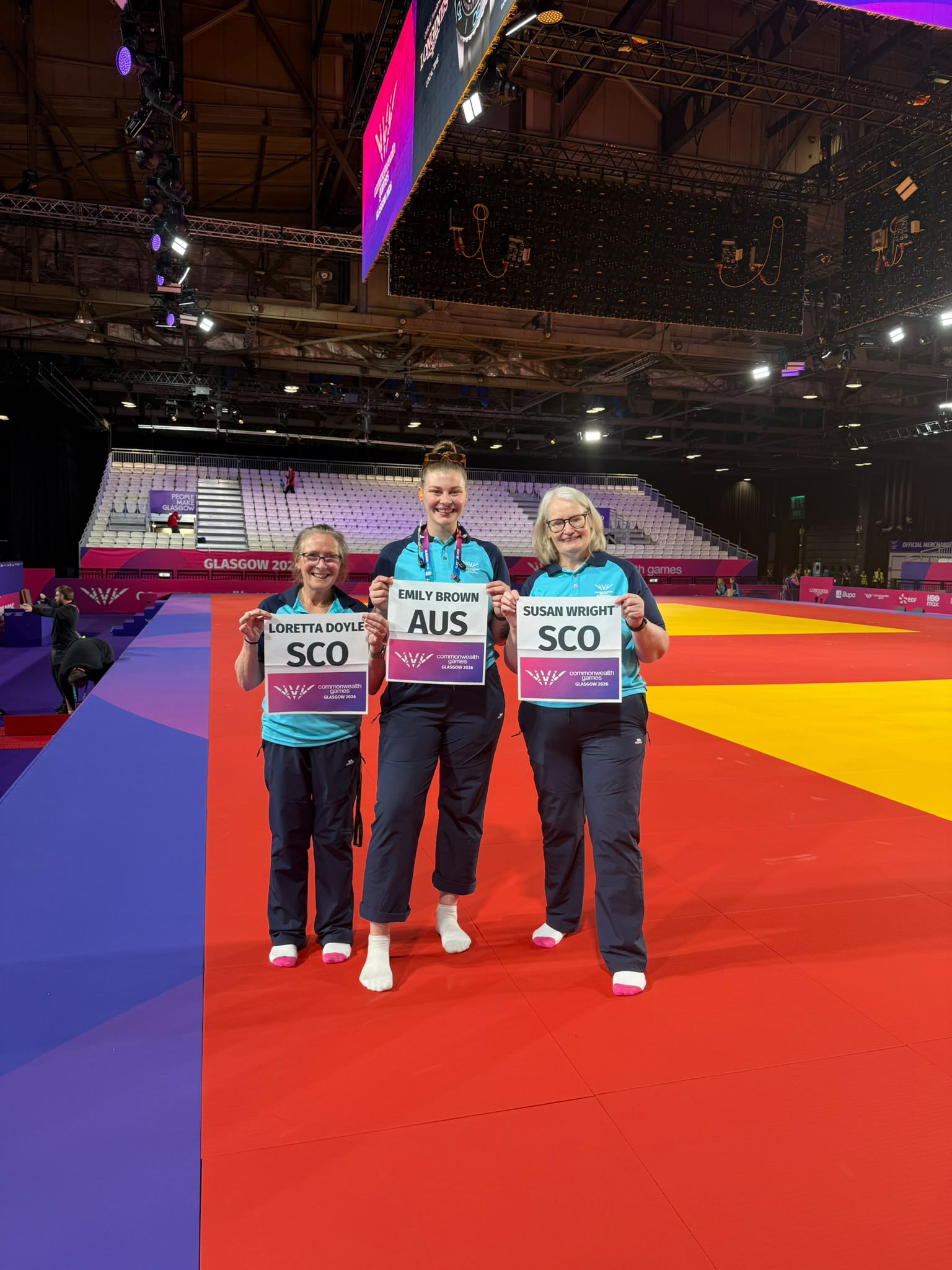
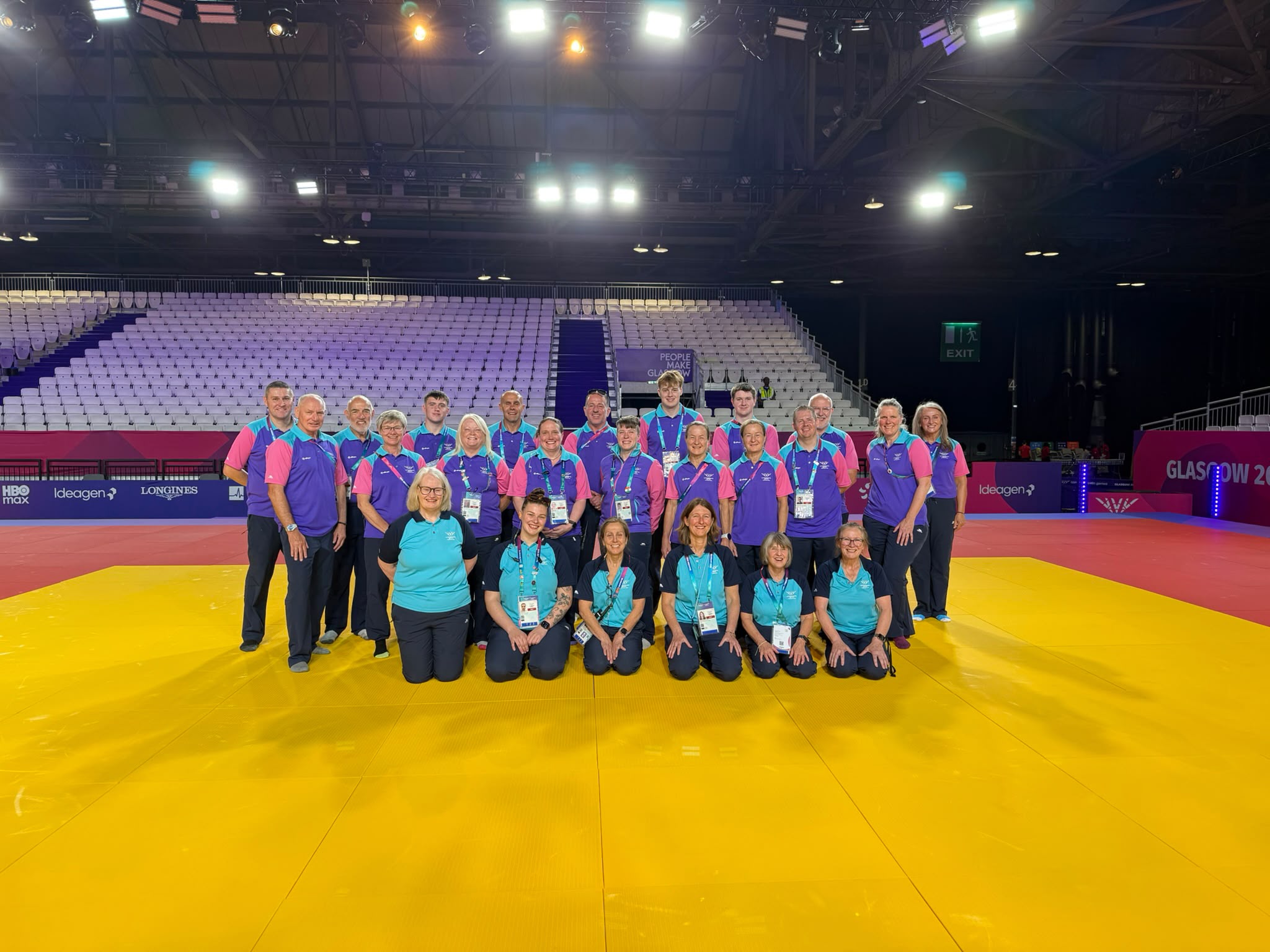
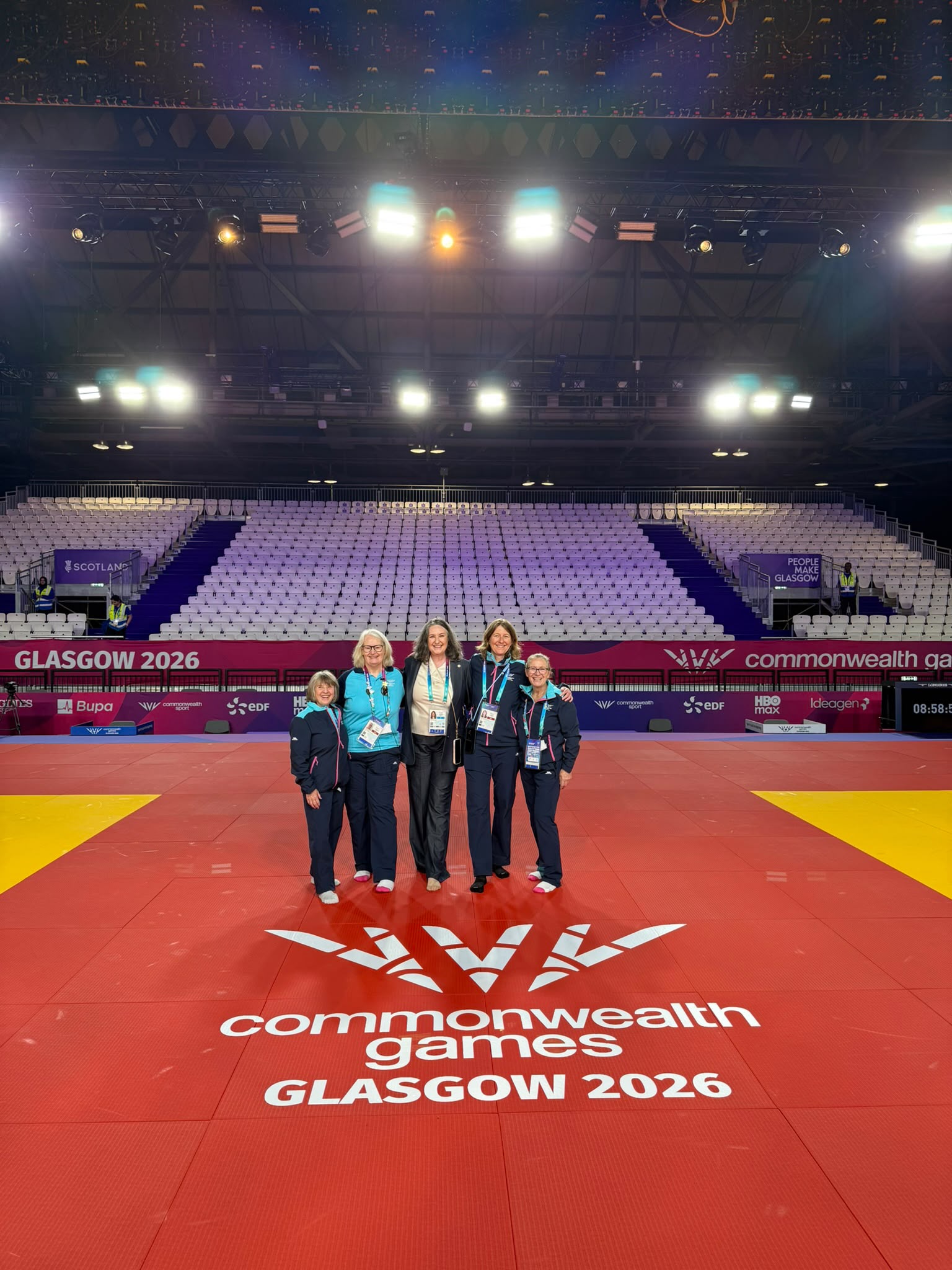
When judo took centre stage at the 2026 Glasgow Commonwealth Games this summer, women were leading from the front. Across key operational and leadership roles, from Technical Delegate to Sports Coordinator, Loretta Doyle, Susie Wright and Joyce Heron worked to deliver a world-class event, drawing on decades of experience in sport and the values that have shaped them throughout their judo journeys.
As part of Scottish Women and Girls in Sport Week, we caught up with all three women to find out more about how judo equipped them with the tools needed to succeed in high-pressure environments and the power of women supporting women, creating opportunities, and inspiring each other to step forward into leadership roles across sport.
What did it mean to lead a majority female team at a home Commonwealth Games?
Loretta: “Well, for me as the competition manager, it was always in my remit to have as many women as possible supporting the games in any sort of managerial or volunteer position, and in the end about 75% of the team were women. All the venue management team were women, and we worked really well together. There were no egos; everybody was part of a team.”
Joyce: “It showed the capabilities of women, that we can deal with pressure and can coordinate things at that level within what’s still considered a male-dominated sport; it shows our strength. Plus, we had Lisa Allan, Secretary General for the IJF, who’s also Scottish there; we had a few coaches, female coaches there as well for the different nations. So, I think, all together, it showed the strength of women’s judo and women’s ability to deliver on the big stage.”
Did you ever think you would be where you are now, when you first started your judo journey?
Susie: “Simple answer: absolutely not. I started judo at the age of 16, and I fell in love with it immediately. Then I took a break because I had my son, and then I came back to the sport when he started judo, and I got encouraged into coaching and into table officiating, then into being a competition controller. It just kept going!”
Joyce: “I don’t think I did, if I’m honest. Right at the beginning, I just thought I was going along to find out more about judo and to try it out, and I just fell in love straight away.”
How did judo prepare you for a role in leading a major home Games?
Loretta: “I think a lot comes from the values of our sport: discipline, our respect for others, and that hard work ethic. We’re not frightened of working hard because that’s something that we know, and that to get any results in judo, you must work hard. What you put in is what you get out.”
Joyce: “Being a hard worker, a team player, and that I’ve got great perseverance. We never panicked; we just got it done and made it happen, even if it wasn’t in the job. Everybody was willing to step up and commit that extra time and effort to making sure everything worked.”
Are there any other women who have encouraged you or inspired you throughout your journey?
Susie: “I would say Loretta more than anybody. We worked together in Birmingham for the 2022 Commonwealth Games. I couldn’t do Paris, but then we worked together at the Games in Glasgow, and it was the best time.”
Joyce: “Probably one of my first coaches, Anne Carruthers, who was from the Paisley Samurai when I started way back in, I think it would have been February 1974. She just saw that fighting spirit and determination in me, and a reasonable amount of athleticism that I didn’t even realise. Basically, she saw things in me that I never saw in myself.”
What advice would you give to other women and girls looking beyond sport?
Susie: “Find somebody to speak to who’s already done it, or who is where you want to be. And if you come and speak, people will help you.”
Loretta: “Because normally when women get to positions, nine times out of ten it’s most probably been a woman that’s helped them get there! We also need to stop doubting ourselves so much and challenge ourselves more, because the more experience you gain, the more confidence you get. Even though the sport is growing for women, and we’ve got some very strong women in there, we cannot take our foot off the pedal. Don’t sit on the bench and think, ‘well, I don’t know’. Try, have a go!”